
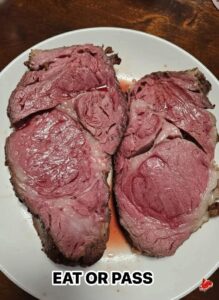
At first glance, this meat may look juicy and tender to some people — but to others, it appears dangerously undercooked. The image shows extremely rare beef with a deep pink-red center and visible raw-looking texture. While some steak lovers enjoy rare meat, consuming beef that is too undercooked can carry important health and safety risks if not prepared properly.
Understanding the difference between safe rare steak and unsafe undercooked meat is essential for protecting your health.
Why This Meat Raises Concerns
The main issue with this type of meat is that the inside appears very undercooked. In some areas, the meat still looks almost raw rather than properly heated through.
Potential concerns include:
- Bacteria surviving inside or on the surface
- Improper internal cooking temperature
- Increased food poisoning risk
- Unsafe preparation or storage before cooking
The texture in the center also suggests uneven cooking, which can happen when large cuts of meat are cooked too quickly at high temperatures.
Is Rare Beef Always Dangerous?
Not necessarily.
Whole cuts of beef such as ribeye or prime rib can sometimes be eaten rare if:
- The meat is high quality
- It has been properly stored
- The outside surface is thoroughly seared
- The internal temperature reaches a safe level
However, extremely undercooked beef may still be risky for:
- Children
- Pregnant women
- Elderly people
- People with weakened immune systems
The Biggest Problem: Internal Temperature
The real safety issue is not only the color — it’s the internal temperature.
Many people assume:
- Pink meat = unsafe
- Brown meat = safe
But that is not always true.
The safest way to check meat is with a food thermometer.
Recommended Beef Temperatures
- Rare: about 125°F (52°C)
- Medium-rare: about 135°F (57°C)
- Medium: about 145°F (63°C)
145∘F (63∘C)145^\circ F \,(63^\circ C)
Food safety organizations generally recommend at least medium-level temperatures for safer consumption.
Possible Health Risks
Eating improperly cooked beef may increase the risk of:
- Food poisoning
- Nausea
- Vomiting
- Stomach cramps
- Diarrhea
- Bacterial infections
Possible bacteria can include:
- E. coli
- Salmonella
- Listeria
These risks become more serious if the meat was not stored or handled correctly before cooking.
Why Some People Still Prefer Rare Steak
Despite the risks, many steak enthusiasts prefer rare or medium-rare beef because:
- It stays more tender
- The meat retains more juices
- The texture feels softer
- The flavor can be richer
Professional chefs often prepare rare steak safely by using high-quality meat and precise temperature control.
Signs Meat May Be Unsafe
You should avoid meat if it has:
- A sour or strange smell
- Slimy texture
- Gray-green discoloration
- Excessive liquid leakage
- Uneven cooking with cold center
- Poor storage history
How to Cook Beef More Safely
To reduce risk:
- Use a meat thermometer
- Let meat rest after cooking
- Sear the outside properly
- Store meat at safe refrigerator temperatures
- Avoid cross-contamination
- Buy meat from trusted sources
Final Thoughts
Rare steak can be enjoyable for some people when prepared correctly, but meat that appears extremely undercooked or unevenly cooked can raise legitimate safety concerns. The key factor is proper handling and internal temperature — not just color alone.
If you are unsure whether meat is fully safe to eat, it is always better to cook it a little longer rather than risk foodborne illness.