🍓 Homemade Fruit Jelly – Full Recipe

Yield: about 5–6 jars (240 ml / 8 oz each)
Prep: 15 minutes
Cook: 15–20 minutes
Ingredients
- 4 cups (950 ml) fruit juice — strawberry, raspberry, blackberry, grape, apple, etc.
- 1 package (about 49 g / 1.75 oz) powdered fruit pectin
- 5 cups (1 kg) granulated sugar
- 2 tablespoons bottled lemon juice
- ½ teaspoon unsalted butter, optional, to reduce foam
Instructions
1. Prepare the jars.
Wash the jars, lids, and rings thoroughly. Keep the jars hot until ready to fill.
2. Combine the juice and pectin.
Pour the fruit juice into a large, deep saucepan. Add the lemon juice and powdered pectin. Whisk well until the pectin is evenly distributed.
3. Bring to a boil.
Place over medium-high heat and bring the mixture to a full rolling boil—a boil that cannot be stirred down.
4. Add the sugar.
Add all the sugar at once and stir continuously until completely dissolved.
Return the mixture to a full rolling boil.
5. Boil the jelly.
Once the rolling boil returns, boil hard for 1 minute, stirring constantly.
For traditional jelly, the temperature near sea level is approximately 220°F / 104°C, although the exact setting point changes with altitude and the recipe.
6. Remove the foam.
Remove from the heat. Skim off any foam with a spoon. You can also add about ½ teaspoon unsalted butter during cooking to help reduce foaming.
7. Fill the jars.
Ladle the hot jelly into hot jars, leaving about ¼ inch (6 mm) headspace. Wipe the rims clean and apply the lids.
8. Process for shelf-stable canning.
For shelf-stable jars, use a tested water-bath canning process appropriate for your recipe, jar size, and altitude. Processing times should come from a validated canning source rather than being guessed.
9. Let it set.
Allow the jars to cool undisturbed. Jelly may take 12–24 hours, and sometimes longer, to reach its final consistency.
🍯 Troubleshooting
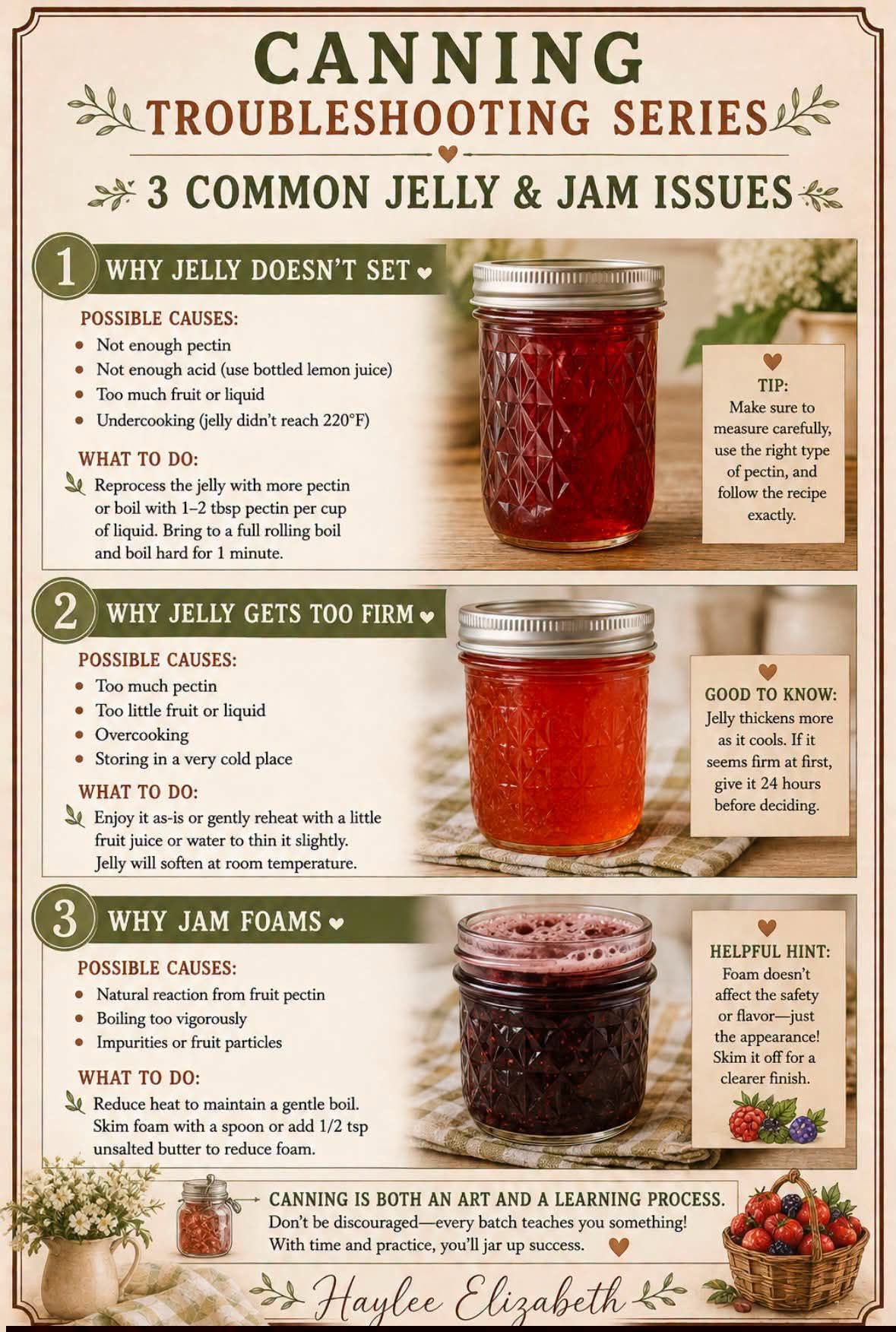
If your jelly doesn’t set, the common causes are too little pectin or acid, incorrect fruit/sugar proportions, or insufficient cooking. Don’t judge it immediately—give it about 24 hours first.
If your jelly becomes too firm, too much pectin, too little liquid, or overcooking may be responsible. Once opened, you can gently warm it with a small amount of fruit juice or water to soften it.
If your jam or jelly develops foam, that’s usually an appearance issue rather than a problem with the flavor. Maintain a controlled boil and skim the foam from the surface before filling the jars.
Chef’s Tips
Use the exact amount and type of pectin specified by your recipe because different pectins aren’t always interchangeable. Measure the fruit, sugar, acid, and pectin carefully. For canning, bottled lemon juice is often specified because its acidity is standardized.
For shelf-stable home canning, it’s safest to use a tested fruit-specific formula from a source such as the USDA/National Center for Home Food Preservation rather than changing the sugar, acid, fruit, or pectin ratios freely.